If your water softener starts acting up, it doesn’t always mean you need a new one right away. Sometimes, a quick water softener repair solves the issue and keeps the system running for years longer. But hard water and pressure changes paired with a failing unit often necessitate replacement.
In this guide, you’ll learn how to tell the difference between needing a repair and a full water softener replacement, what warning signs matter most, and when it makes sense to invest in a new water softener for hard water.
What a water softener does
A water softener removes calcium and magnesium from your water, helping your home avoid hard-water problems. When the system works properly, every day water use is much improved. A reliable water softener for hard water also helps protect your property and belongings from long-term mineral damage.
Over time, though, parts wear out, and the system loses efficiency. Some homeowners get by with water softener repair, while others reach the point where a complete water softener replacement is the better investment. The key is knowing which situation you’re in before the hard water starts causing bigger problems.
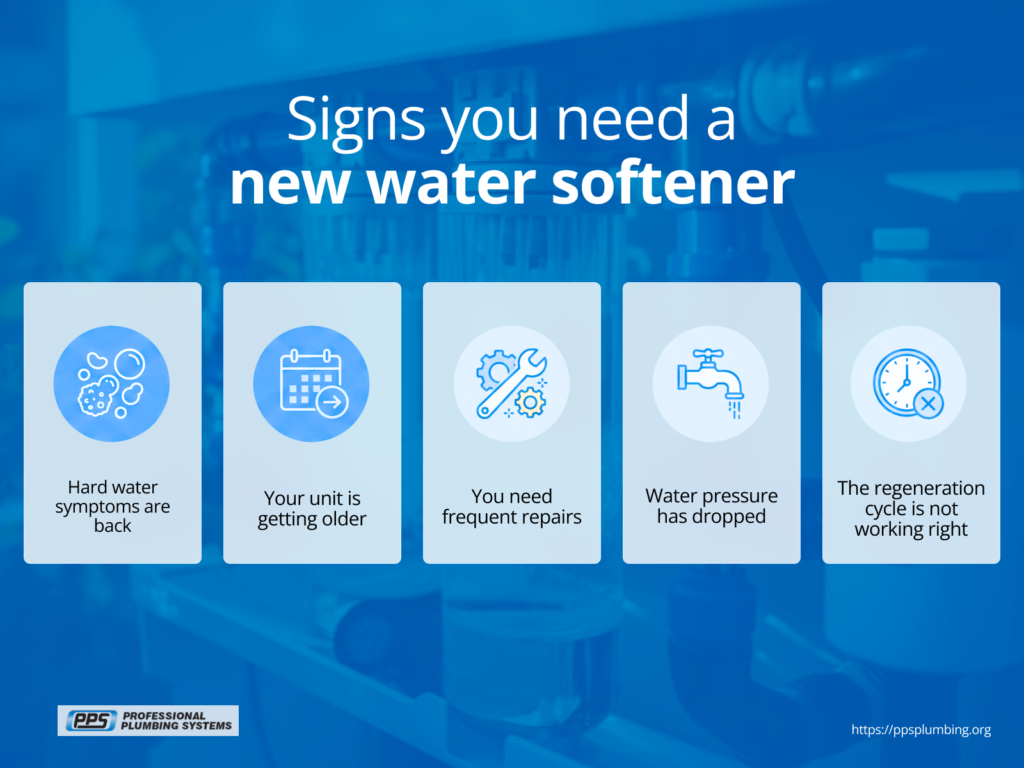
Signs it may be time
- Hard water symptoms are back
If you’re seeing white spots on dishes or scale on faucets, your system may no longer be softening water effectively. Soap scum and stiff laundry are also signs. That often means the water softener for hard water is underperforming or failing. - Your unit is getting older
Most systems last about 10 to 15 years, depending on water quality and maintenance. Once a unit is past that range, a water softener replacement often makes more sense than repeated water softener repair calls. - You need frequent repairs
If the same system keeps breaking down, the repair bills add up quickly. At some point, replacing a water softener is usually cheaper than continuing to patch an aging unit. - Water pressure has dropped
A clogged or failing softener reduces flow through the home. If pressure is low and plumbing issues have been ruled out, the softener may be the problem. - The regeneration cycle isn’t working right
If the system isn’t recharging properly, it can’t keep up with mineral removal. That is a strong sign that the water softener for hard water is no longer working.
Should I repair or replace my water softener?
A good water softener repair is usually the right move when the problem is small, and the system is still relatively young. Common fixes include:
- Cleaning the brine tank
- Replacing a valve
- Clearing a salt bridge
- Correcting a timer issue
If the tank and resin are still in good shape, repair would be a smart, cost-effective option.
A water softener replacement becomes more appealing when the system is older or inefficient. It’s also a good idea if it’s breaking down more than once a year. If you are paying for a recurring service and still dealing with hard water, replacement usually offers better value. A new water softener for hard water also improves efficiency and reduces strain on your plumbing and water heater.
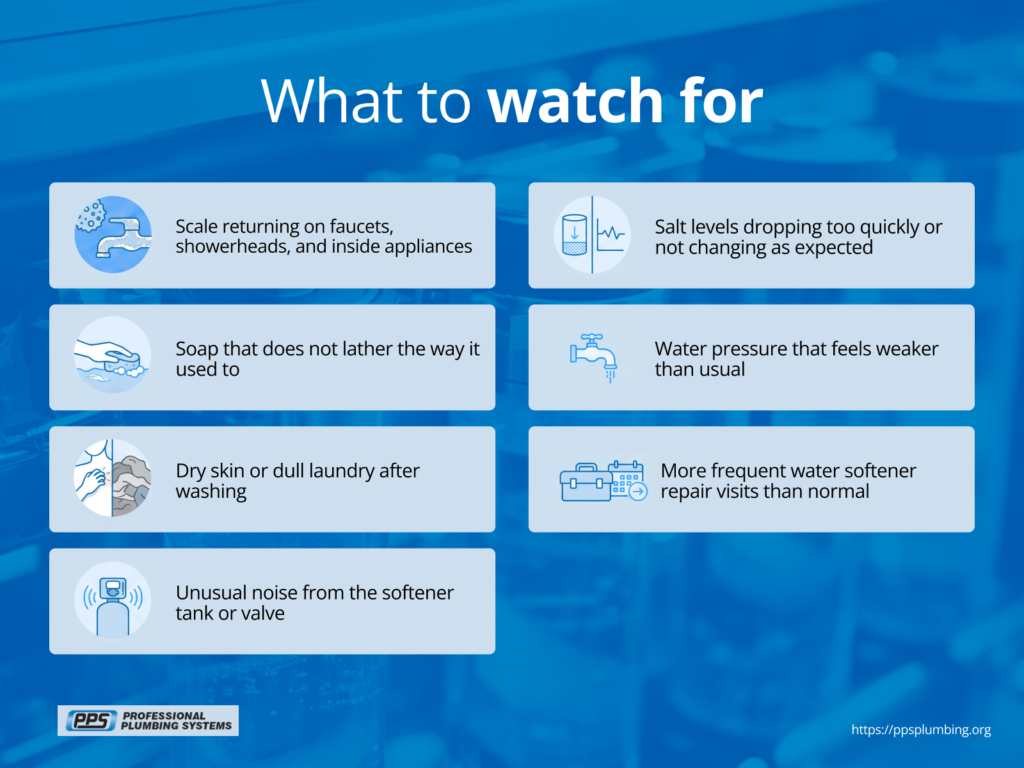
What to watch for
- Scale returning on faucets, showerheads, and inside appliances
- Soap that doesn’t lather the way it used to
- Dry skin or dull laundry after washing
- Unusual noise from the softener tank or valve
- Salt levels are dropping too quickly or not changing as expected
- Water pressure that feels weaker than usual
- More frequent water softener repair visits than normal
These signs don’t always indicate immediate failure, but they do indicate that the system deserves attention. The earlier you catch the issue, the more likely you are to decide between a simple repair and a full water softener replacement before the hard water causes more damage.
Why timing matters
Waiting too long to replace a failing softener allows hard water damage to build up in your plumbing system. Scale shortens your water heater’s lifespan and clogs aerators. It also makes fixtures look worn before their time. A dependable water softener for hard water helps prevent those problems before they spread.
Choosing the right moment also saves money. A timely water softener repair is ideal when the problem is minor, but when the unit is failing often, a new water softener replacement offers lower long-term costs. In many homes, the goal is to protect the entire plumbing system.
Common mistakes to avoid
- Ignoring the return of hard water spots and soap scum
- Assuming every issue needs a full water softener replacement
- Repeatedly paying for water softener repair on an aging unit
- Forgetting that hard water damages water heaters and fixtures, too
- Choosing a system that’s too small for your household’s needs
- Skipping routine maintenance on your current water softener for hard water
Many homeowners wait until the system stops working completely, but that often leads to higher repair costs and more stress. The better approach is to watch for small changes early and decide whether repair or replacement makes the most sense.
Useful stats and insights
- Most water softeners last about 10 to 15 years.
- Hard water symptoms returning are one of the clearest warning signs.
- Frequent repairs often cost more over time than one water softener replacement.
- Poor regeneration usually means the system is no longer performing properly.
- A reliable water softener for hard water helps protect plumbing fixtures, appliances, and water heaters.
These patterns make one thing clear: age, performance, and repair history all matter. If your system is old and symptoms are coming back, replacement is often the better long-term choice.
Helpful tools and options
- Water hardness test strips
- Replacement salt for the brine tank
- A pressure gauge for checking flow issues
- A resin cleaner for basic maintenance
- A smart leak sensor near the softener
- A new water softener for hard water, sized for your home
- Service support for water softener repair and inspection
Testing the water helps you tell whether the problem is temporary or structural. If the system is failing in multiple ways, a water softener replacement may be the more practical fix.
FAQ
Q: How long should a water softener last?
Most systems last 10 to 15 years, though that depends on water quality and maintenance. If your unit is approaching that age and you’re seeing hard water again, it may be time to consider replacing the water softener rather than another repair.
Q: Can a repair solve the problem?
Yes, if the issue is minor, like a salt bridge or a stuck valve. A dirty brine tank is another example. If the system is older or the same issue keeps returning, replacement may be the better option.
Q: What are the biggest warning signs?
Look for scale buildup, soap that doesn’t lather, low water pressure, and strange noises. Those are all signs that your water softener for hard water may no longer be working well enough.
Q: Is replacement worth it?
If your current unit is old or inefficient, a new water softener replacement usually pays off over time, especially when repairs get expensive. It also improves water quality and reduces stress on plumbing fixtures and appliances.
Call PPS Plumbing today
If your water softener is acting up, now is the time to get ahead of the problem. Professional Plumbing Systems offers dependable water softener repair and replacement. Whether your unit needs a simple fix or a full upgrade, our team helps you choose the right solution for your home. Reach out today to get started.